Source Multi Stage Modular Grain Cleaner for Wheat Corn Beans
Find 30 multi stage modular grain cleaner units available for sourcing. Buyers can compare specifications such as capacity, power, and cleaning rates for various seeds and grains like wheat, corn, and beans.
Key considerations
Products List




Comprehensive Sourcing Guide
Strategic Sourcing Guide for Multi-Stage Modular Grain Cleaners
Understanding the Technical Architecture and Capacity Variability
When sourcing a multi-stage modular grain cleaner, buyers must first recognize that "modular" implies a system capable of being configured or expanded to meet specific throughput requirements, rather than a single fixed unit. The market presents a diverse array of configurations, often distinguished by their model designations and processing capacities. Based on observed industry data, these units frequently carry model identifiers such as the 5X-5, 5X-12, 5XZC-5DH, 5XZC-7.5DS, and 5XZC-15. These alphanumeric codes often correlate directly with the machine's intended throughput or structural configuration, serving as the primary technical differentiator for procurement specialists.
Capacity is a critical variable in the selection process. The observed data indicates a significant range in processing capabilities, with specific units documented at 5 tons per hour (5t/H) and others reaching 10 tons per hour (10 Ton/Hour). A model with a capacity of 7.5t/h is also a documented specification, suggesting that the modular nature of these systems allows for scaling between 5 and 10+ tons depending on the specific configuration selected. Buyers should not assume a single standard capacity; instead, they must verify the hourly throughput against their specific production line requirements. The physical footprint of these machines also varies, with dimensions observed around 4970mm in length, 1900mm in width, and 3100mm in height for certain models. This spatial requirement is essential for factory floor planning and logistics.
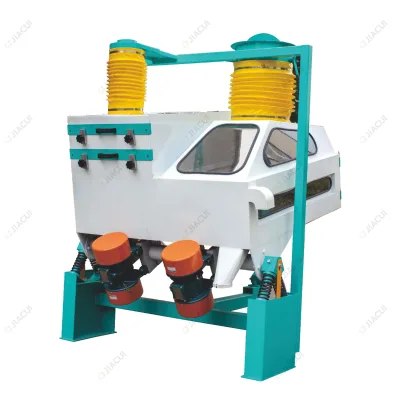
The internal architecture of these cleaners often includes specific components designed for efficiency. For instance, some configurations utilize a belt bucket elevator for material transmission, employing PVC buckets to ensure gentle handling of the grain. The cleaning mechanism itself is often supported by a substantial screen area, with documented examples showing a surface area of 14.4 square meters. This extensive screening surface is crucial for achieving high separation efficiency in a multi-stage process. Additionally, the inclusion of cyclones in certain models, noted as "Installed Cyclone," indicates a dust extraction or air separation capability integrated into the cleaning cycle, which is vital for maintaining grain quality and worker safety.
Compliance Standards and Certification Verification
In the global agricultural machinery market, compliance with international standards is not merely a formality but a prerequisite for operational safety and market access. When evaluating potential suppliers, buyers must scrutinize the certification status of the equipment. The observed data reveals a spectrum of compliance claims, ranging from specific industry standards to broader quality management systems. Commonly cited standards include ISO9001, which represents a quality management system certification, and various third-party verification bodies such as TUV, SGS, and SONCAP.
It is important to note that certification status is not uniform across all product listings. While some models are explicitly associated with a combination of ISO9001, TUV, and SGS, others may only list ISO9001 or specific capacity standards. For example, one configuration lists its standard simply as "capacity 7.5t/h," which is an operational specification rather than a formal certification. Another entry cites "agriculture machinery" as the standard, which is a category descriptor rather than a compliance mark. Therefore, buyers must verify that the specific unit they intend to purchase carries the necessary certifications for their target market. If the equipment is destined for export to regions requiring SONCAP (a Nigerian certification) or specific TUV safety marks, the supplier must provide valid documentation for that specific model, as these are not guaranteed for every unit in a product line.
Furthermore, the origin of the machinery plays a role in the compliance landscape. The majority of the observed data points to Hebei, China, as the production origin. While this region is a major hub for agricultural machinery, it necessitates rigorous due diligence regarding the specific factory's quality control processes. Buyers should request current, verifiable certificates of conformity rather than relying on general marketing claims. The presence of a "Top Level with High Quality Seed Cleaning Machine" designation in some listings suggests a tiered product line, where higher-tier models may carry more comprehensive certifications. However, without explicit documentation, this remains an observation rather than a guaranteed attribute.
Cost Drivers and Pricing Structure Analysis
The financial landscape for multi-stage modular grain cleaners is characterized by a wide variance in pricing, reflecting differences in capacity, complexity, and customization options. The observed price range spans from approximately 1.6 USD to 43,000 USD. This massive disparity indicates that the market includes both small-scale, entry-level units and large, industrial-grade systems. The lower end of the spectrum likely corresponds to basic cleaning units or smaller modular components, while the upper end represents fully integrated, high-capacity systems with advanced features like cyclones and extensive screen areas.
Several factors drive these costs. First, the capacity of the machine is a primary determinant; a 10-ton-per-hour unit will inherently cost more than a 5-ton unit due to the larger motors, more robust frames, and increased material usage. Second, the power requirements influence the price. Units with power ratings of 7.74kW and 10.1kW represent different energy consumption profiles and motor costs. Third, customization plays a significant role. While some listings indicate that customization is available, others specify that certain models are "Non-Customized." Customization typically incurs additional costs for engineering, tooling, and production time.
The Minimum Order Quantity (MOQ) is another critical cost driver. The observed MOQ range is 1 to 100 units. For buyers seeking a single unit for a pilot project or a small farm, an MOQ of 1 is favorable. However, for large-scale agricultural operations or distributors, an MOQ of 100 might be required to access certain price tiers or specific configurations. Buyers must also consider the packaging costs, which vary from "Mill's Standard" to "Plywood Case" or "Wooden Package." While these are often included in the unit price, the choice of packaging can impact shipping costs and insurance premiums, especially for international freight.
Operational Applications and Material Compatibility
The versatility of multi-stage modular grain cleaners is one of their most valuable attributes, allowing them to handle a wide variety of agricultural products. The observed data highlights applications for "Various Seed and Grains," "Beans," "Wheat," "Corn," "Sesame," and "Paddy." This broad compatibility suggests that the modular design allows for the adjustment of screen sizes, air velocities, and cleaning stages to suit different grain densities and impurity profiles.
For instance, cleaning wheat requires different parameters than cleaning sesame or paddy rice. The ability to switch between these applications without purchasing entirely new machinery is a key benefit of the modular approach. The "Function" of these machines is explicitly listed as "Grain Cleaning and Grading," indicating that they perform both the removal of foreign matter and the sorting of grain by size or density. The cleaning rate is a critical performance metric, with some models achieving a rate of 98%. This high efficiency is essential for maintaining the market value of the grain and reducing post-harvest losses.
The power source for these operations is consistently listed as "Electricity," specifically "3 Phase Electricity" with voltages such as 380V. This standardization simplifies the integration of these machines into existing industrial facilities, which typically have three-phase power infrastructure. However, buyers must verify that their local power grid can support the specific voltage and amperage requirements of the selected model, particularly for higher-capacity units. The color of the machine, often observed as Green, White, Cream, or Optional, is primarily an aesthetic choice but may also reflect specific branding or safety color-coding requirements in certain regions.
Supplier Evaluation and Production Capabilities
Evaluating a supplier for agricultural machinery requires a deep dive into their production capabilities and logistical reliability. The observed data indicates that the primary production location is Hebei, China, a region known for its manufacturing base. However, the presence of a location does not guarantee quality; buyers must assess the specific factory's capacity to meet their volume and timeline needs. The "Condition" of the machines is consistently listed as "New," which is a baseline expectation, but the actual manufacturing process and quality control measures are less visible.
Lead time is a critical factor in supplier evaluation. One observed data point mentions a "Delivery Date" of 17 days, suggesting that for standard configurations, production and shipping can be relatively quick. However, this lead time may vary significantly based on customization requests, order volume, and current production backlog. Buyers should treat the 17-day figure as a reference point rather than a guarantee, especially for non-customized or high-volume orders. The "Warranty" period is another key metric, with a standard offering of 1 Year observed in the data. This warranty period covers defects in materials and workmanship, but buyers must clarify the scope of coverage, including whether it covers shipping, installation, and spare parts.
The packaging method is also an indicator of supplier professionalism. Options range from "Mill's Standard Plastic Film Package" to "Wooden Case" or "Usually Export Standard Wooden Boxes." The choice of packaging reflects the supplier's attention to protecting the equipment during transit. For international shipments, export-standard wooden boxes are generally preferred to prevent damage from humidity and rough handling. Buyers should verify that the supplier has a proven track record of packaging equipment for long-distance transport, as this directly impacts the condition of the machinery upon arrival.
Quality Control and Long-Term Procurement Strategy
Ensuring long-term value from a multi-stage modular grain cleaner involves more than just the initial purchase; it requires a strategy for quality control and maintenance. The "Expanding Method" listed as "Dry Expansion" suggests a specific processing technique that may affect the durability and efficiency of the machine over time. Buyers should inquire about the maintenance requirements for this expansion method and the availability of replacement parts.
Quality control should be integrated into the procurement process. While standards like ISO9001 provide a framework for quality management, buyers should request specific test results or performance data for the exact model they are purchasing. The "Cleaning Rate" of 98% is a strong claim, but it should be backed by independent testing or verified performance records. Additionally, the "Remarks" section in supplier listings, such as "Installed Cyclone," provides insight into the specific features of the unit. Buyers must ensure that these features are not just marketing terms but are functional components that meet their operational needs.
Long-term procurement considerations also include the availability of technical support and training. A machine with a 1-year warranty is standard, but the ability to access technical support for troubleshooting and maintenance is crucial for minimizing downtime. Buyers should evaluate the supplier's support infrastructure, including the availability of manuals, spare parts catalogs, and remote or on-site technical assistance. The "Customization" attribute being available offers a path for future upgrades, allowing the buyer to adapt the machine as their processing needs evolve.
In conclusion, sourcing a multi-stage modular grain cleaner requires a meticulous approach that balances technical specifications, compliance verification, cost analysis, and supplier reliability. By focusing on the observed data regarding capacity, standards, and application, buyers can make informed decisions that align with their operational goals. The wide range of options, from 5t/h to 10t/h units, and the variety of certifications available, provide flexibility for different market segments. However, the responsibility lies with the buyer to verify every claim, from the cleaning rate to the lead time, ensuring that the final procurement delivers the expected performance and value.
FAQs
What is the typical capacity range for these machines?
These machines typically offer capacities ranging from 5 tons per hour to 10 tons per hour. Specific models like the 5XZC-5DH handle 5t/H, while others reach 10 Ton/Hour to meet varying production needs.
Which certifications are commonly associated with these units?
Common certifications include ISO9001, TUV, SGS, and SONCAP. Some listings also reference agriculture machinery standards, but buyers must verify specific documentation for the exact model they intend to purchase.
Can these cleaners handle different types of seeds and grains?
Yes, they are designed for various seeds and grains including wheat, corn, beans, sesame, and paddy. The modular design allows for adjustments to screen sizes and air velocities to suit different grain densities.
What is the standard delivery lead time for new units?
The standard delivery date observed is approximately 17 days for standard configurations. This timeline may vary based on customization requests, order volume, and current production backlog at the factory.
How does the power requirement vary across different models?
Power requirements vary, with observed ratings of 7.74kW and 10.1kW. These units typically operate on 3-phase electricity at 380V, requiring verification of local power grid compatibility before installation.
What packaging options are available for international shipping?
Packaging options include Mill's Standard, Plywood Case, Wooden Package, or Export Standard Wooden Boxes. The choice affects shipping costs and protection, with wooden cases preferred for long-distance international freight.
Is customization available for specific production line needs?
Customization is available for certain configurations, while other models are listed as non-customized. Buyers should confirm the customization status of the specific model to ensure it meets unique operational requirements.